I have decided to share with you a piece of the whole process of joining a doctorate program. The process actually varies a lot depending on the institution you would like to join.
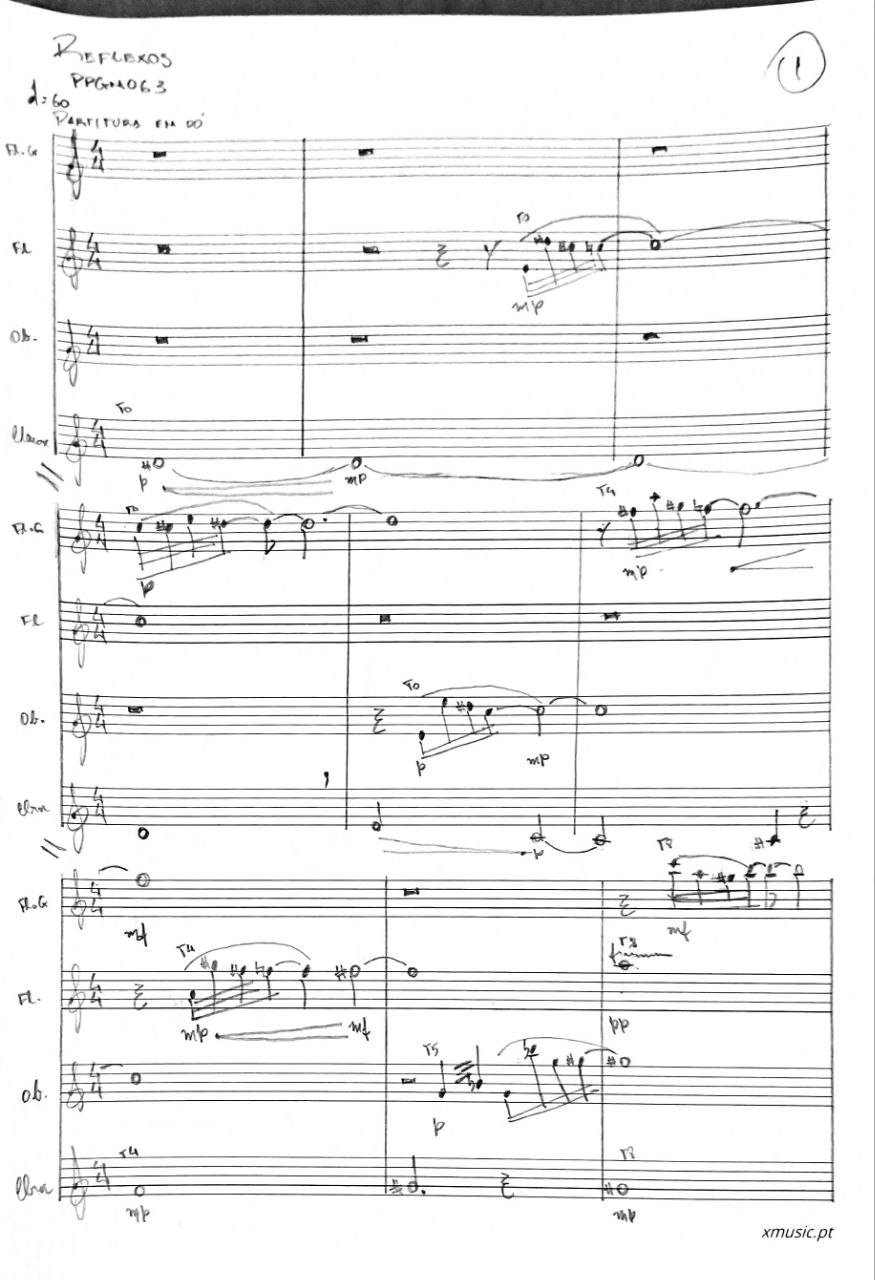
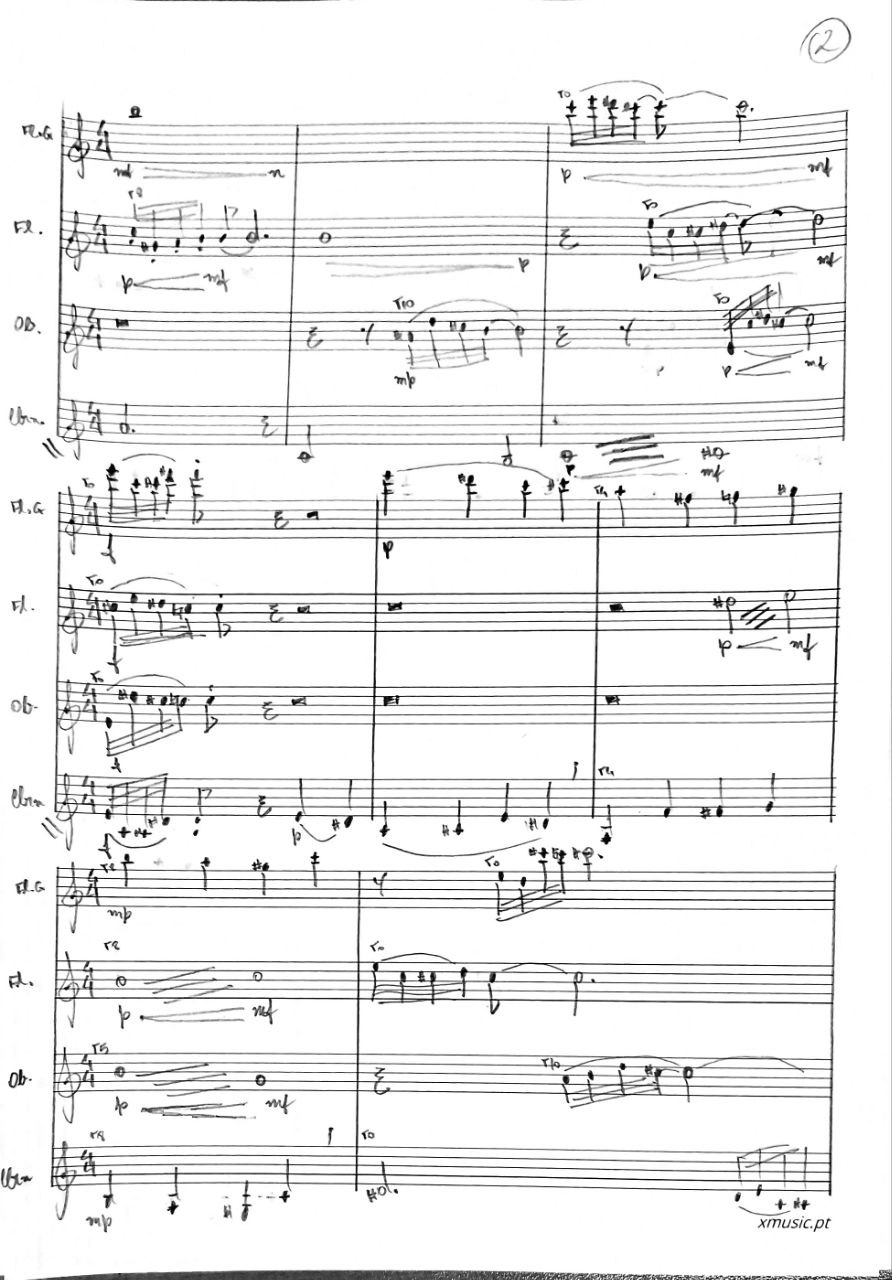
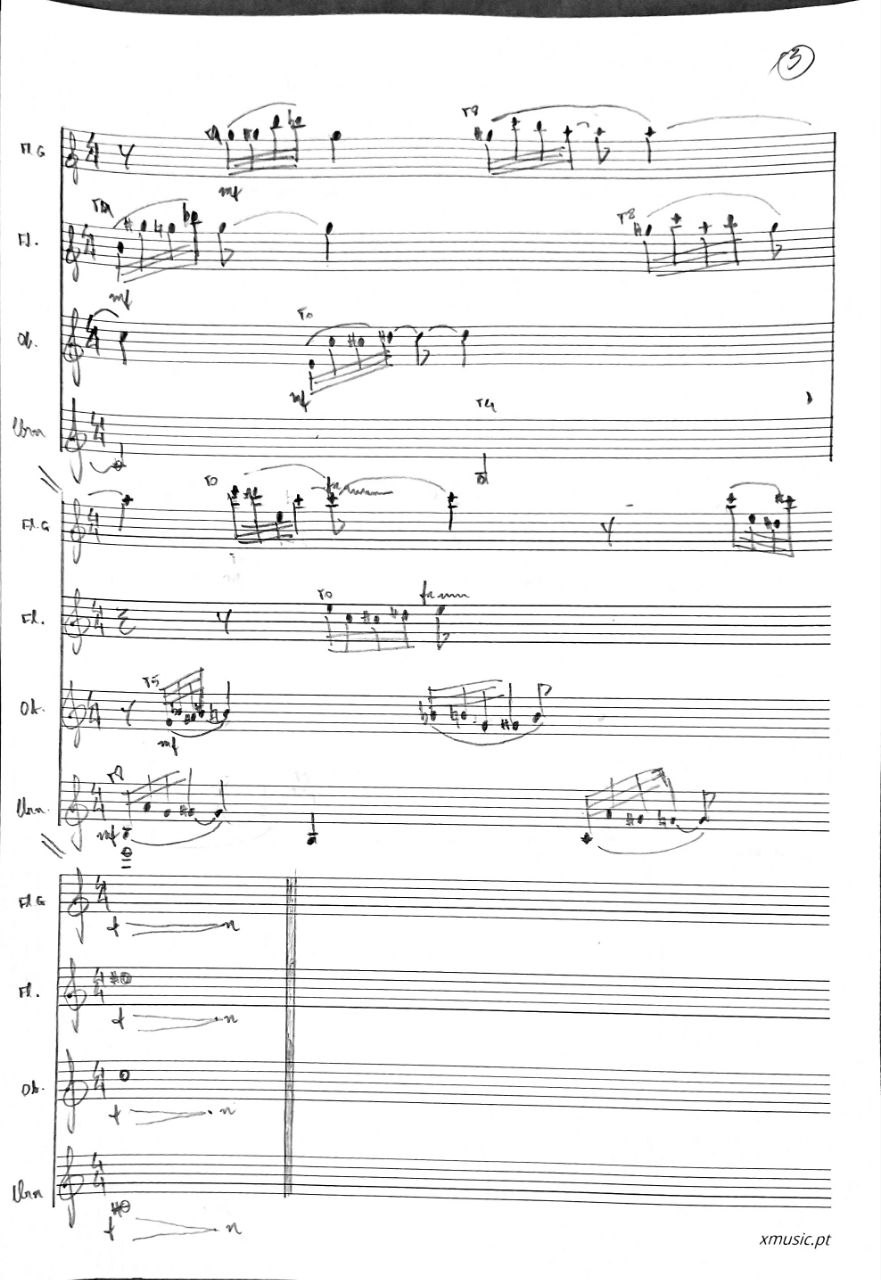
One of the institutions I applied to proposed a ‘practical’ exam in which applicant were supposed to compose a little piece of music according to their orientations. Instrumentation would also be pulled at the time of the exam.
What they wanted to check with this procedure is the applicant´s ability to create music according to a little set of ‘rules’ and the knowledge about the instrumentation.
It was also required that, at the end of the piece, we write a little essay with some description of the it. And last, but not least: everything was supposed to be handwritten. No score computers, or tablets or orchestration books. Just you and a blank page.
I will leave you with those notes:
Text
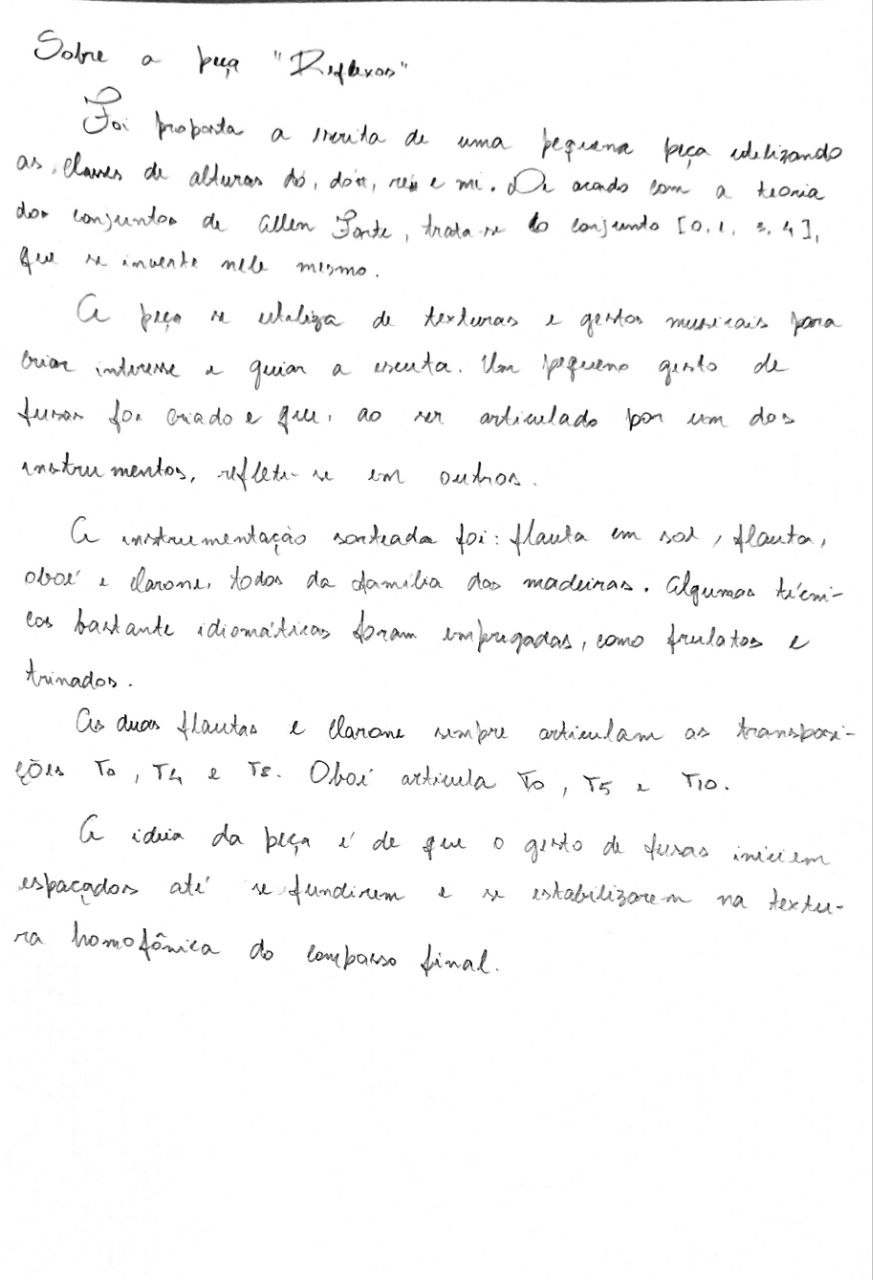
- Pitch-Class Selection (Set Theory / Allen Forte):
The piece was conceived as a short work based on the pitch classes C, C#, D, and E. According to Allen Forte’s Set Theory, this corresponds to set class [0, 1, 2, 4], which is self-inversional (inverts onto itself). - Gestures and Texture:
The work employs musical textures and gestures to generate interest and guide the listening experience. A small “fusion gesture” was developed which, upon being articulated by one of the instruments, is reflected in the others. - Instrumentation and Techniques:
The assigned instrumentation consists of alto flute, concert flute, oboe, and bass clarinet—all from the woodwind family. Highly idiomatic techniques were employed, such as flutter-tonguing and trills. - Transpositions:
The two flutes and the bass clarinet consistently articulate the transpositions T0, T4 and T8.
The oboe articulates T0, T5 and T10. - Formal Concept:
The underlying formal idea is for the fusion gestures to begin widely spaced, gradually merging and stabilizing into a homophonic texture in the final measure.


Deixe um comentário